
Winter
Mild days, cool nights, and the peak snowbird season. Book RV parks and event weekends early. This is the best all-around window for first-time visitors.
Weather & seasons
One of the sunniest cities in the country is also a place where the calendar changes everything. Here is what each month actually feels like.
The short answer
November through March is the reliable outdoor window: mild days, cool nights, and the highest chance of comfortable hiking, cycling, and riverfront time. October and April are warmer shoulder months. June through September is extreme heat season.
Yuma averages about 4,055 hours of sunshine a year — roughly 91 percent of possible daylight — and only about 3 inches of rain. That is great news for planning, but it also means heat and hydration deserve more attention than the forecast’s “sunny” icon suggests.
| Month | Avg high | Avg low | Rain | What it feels like | Best for |
|---|---|---|---|---|---|
| January | 70°F | 48°F | 0.39 in | Cool mornings, mild afternoons | Hiking, history, riverfront |
| February | 73°F | 50°F | 0.28 in | Mild and often breezy | Outdoor sights, cycling |
| March | 80°F | 55°F | 0.28 in | Warm days, cool nights | Festivals, desert trails |
| April | 86°F | 60°F | 0.08 in | Hot by afternoon | Early hikes, river time |
| May | 94°F | 67°F | 0.04 in | Very hot and dry | Early mornings, water |
| June | 103°F | 75°F | 0.04 in | Extreme heat, low humidity | Indoor breaks, dawn outings |
| July | 107°F | 83°F | 0.24 in | Hottest month; monsoon humidity | Indoor plans, late evenings |
| August | 106°F | 83°F | 0.59 in | Hot and humid; storm chance | Indoor plans, storm watching |
| September | 101°F | 78°F | 0.28 in | Still hot; storms fade | Early outdoor plans |
| October | 90°F | 66°F | 0.28 in | Cooling and comfortable | Everything opens up |
| November | 78°F | 53°F | 0.16 in | Mild; snowbird season begins | Outdoor travel, events |
| December | 69°F | 47°F | 0.43 in | Cool mornings, pleasant days | Holiday events, desert walks |
How to read this: averages smooth out extremes. A “70°F January” can still include cold mornings and windy days. Check the current forecast and heat warnings before you go.
The seasons
The same place, four different packing lists.
Mild days, cool nights, and the peak snowbird season. Book RV parks and event weekends early. This is the best all-around window for first-time visitors.
Warm, often windy, and blooming. March can still be busy with festivals. April and May heat up quickly; start hikes early and carry extra water.
Extreme heat and a chance of monsoon storms. Plan outdoor time before 9 a.m. or after 6 p.m., keep an indoor backup, and never hike midday.
The relief season. October is still warm but improving; November brings mild days and the start of the winter event calendar. Watch for wind and early cool nights.
Heat safety
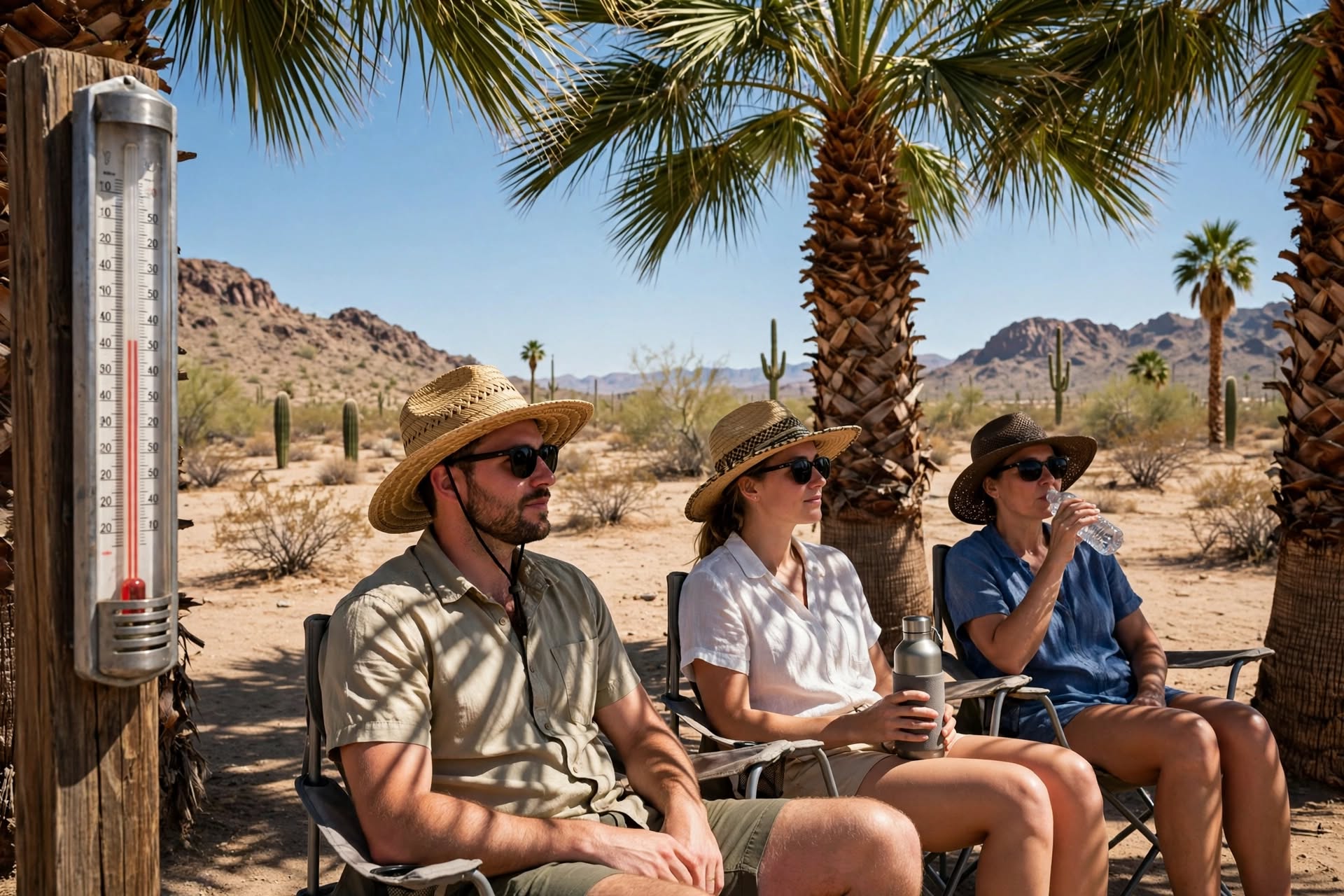
Yuma’s dry heat can dehydrate you before you notice. Drink water before you feel thirsty, avoid strenuous activity during the hottest part of the day, and check on children, older adults, and pets. Never leave anyone in a parked vehicle.
Monsoon storms can produce dust, lightning, and flash floods. If a road is covered with water, turn around. If you are on a trail or lake when storms approach, move to shelter and wait it out.
Read the full planning guide, browse seasonal itineraries, or check the event calendar before you book.
Questions
November through March is the most comfortable stretch for outdoor sightseeing. October and April are good shoulder months if you can handle warmer afternoons. Summer is for early starts, water, and indoor backups.
Average July highs are around 107°F, and the city has recorded 124°F. Heat is the main planning constraint from June through September. Check National Weather Service warnings before spending time outside.
Yes. Late summer can bring higher humidity, dust storms, and brief heavy rain, usually from July into September. Storms can cause flash flooding on roads and in washes. Never drive through standing water.
Not much. NOAA’s 1991–2020 normals put annual precipitation at about 3 inches. Rain is rare, but when it comes it can be intense. Carry water and sun protection even on a cloudy day.
Sun protection, a hat, sunglasses, refillable water, and layers for cool winter mornings. For summer, add electrolyte packets and loose, light clothing. Closed-toe shoes are better for desert trails than sandals.
Sources: NOAA National Centers for Environmental Information, 1991–2020 U.S. Climate Normals; National Weather Service Phoenix; Visit Yuma climate information. See the full source list.
Last reviewed: November 17, 2026.