
Outdoors
Betty's Kitchen: The Café That Became a Wildlife Refuge
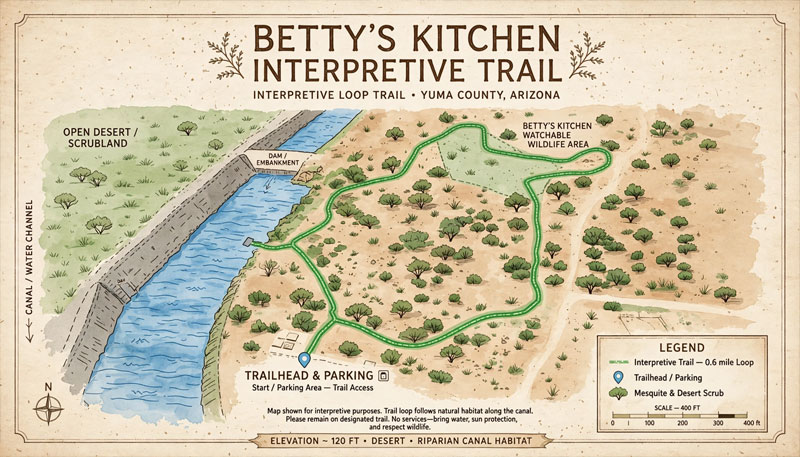
A half-mile riparian loop fifteen miles northeast of Yuma
A name without a restaurant
Fifteen miles northeast of downtown Yuma, tucked into a quiet backwater pocket between Mittry Lake, Laguna Dam, and the Colorado River, sits a shady grove of cottonwoods and willows with one of the most curious names in Arizona: Betty's Kitchen.
There is no restaurant here today—no menu, no counter, and no hot coffee waiting at the end of the road. Instead, the Betty's Kitchen Watchable Wildlife Viewing Area and National Recreation Trail is a peaceful, half-mile riparian loop managed by the Bureau of Land Management (BLM)—a place where ancient Indigenous farmland, 19th-century gold rush history, and a beloved Depression-era river café all vanished beneath Colorado River floods, leaving behind a lush desert sanctuary.
A river terrace with layers of history
Long before anyone called it Betty's Kitchen, this fertile river terrace supported life along the Colorado River for more than a thousand years.
- Ancient river farmers (700–1850 A.D.): Archaeologists have uncovered Patayan artifacts along the terrace, showing how early Indigenous communities relied on the Colorado River's natural seasonal floods to cultivate crops in the rich riverbank silt.
- Gold miners and dam builders: In the late 1850s, prospectors discovered placer gold deposits along the east bank of the river. Decades later, crews arrived to build Laguna Dam—the first dam constructed across the Colorado River—bringing homesteaders and small farms to the area.
- Betty Davidson's café: During the 1930s and 1940s, a local woman named Betty Davidson ran a small, welcoming combination café and bar right by the water. Known to everyone simply as "Betty's Kitchen," it became the go-to gathering spot for anglers, dam workers, and travelers passing along the river.
When the devastating 1983 Colorado River floods swept through the valley, the remaining mid-century cabins and leases were washed out and terminated by the BLM. Rather than rebuilding structures on the floodplain, land managers restored native Fremont cottonwood and black willow groves—and kept Betty's name alive when the trail was designated a National Recreation Trail in September 1992.
"The area now known as Betty's Kitchen takes its name from a small riverside café operated by local resident Betty Davidson in the 1930s. Most of the mid-century settlement was eventually lost to flooding, but the name endured." — Bureau of Land Management historical field note
What you'll see on the trail today
Designated as an official stop on the Arizona Birding Trail, Betty's Kitchen offers a dramatic contrast to the surrounding arid desert.
- The half-mile loop and metal bridge: The flat trail winds beneath a shady canopy of cottonwoods, black willows, and honey mesquite, crossing a rugged metal walking bridge over backwater channels and offering views toward Laguna Dam.
- Prime birdwatching: Because water and thick riparian trees are rare in the Sonoran Desert, the area acts as a magnet for migratory birds and local wildlife. Birders regularly spot great blue herons, snowy egrets, ospreys, Gambel's quail, vermilion flycatchers, Abert's towhees, ladder-backed woodpeckers, and even elusive yellow-billed cuckoos.
- Shoreline and pier fishing: A dedicated fishing pier and adjacent boat-ramp access along the river backwaters attract anglers casting for largemouth bass, catfish, bluegill, and crappie.
Before you go
Betty's Kitchen is a wildlife area, not a developed park. The trail map notes that there are no services, so bring water, sun protection, and everything you need for a short outing. Stay on the designated path, give birds and other wildlife room, and pack out everything you bring in.
The drive northeast from Yuma passes through farm country toward Mittry Lake and Laguna Dam. Check current BLM access and road conditions before setting out, especially after monsoon storms or high water. The reward is one of the quietest and most unexpected riparian landscapes in Yuma County.
Keep reading
Follow the next thread.
 Outdoors
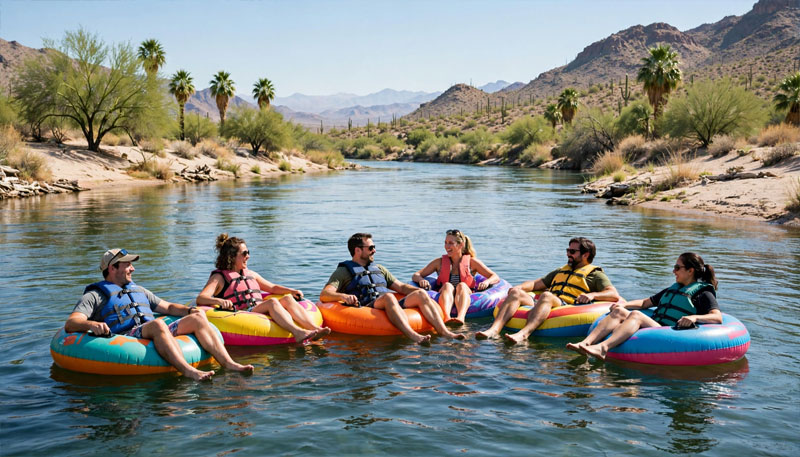
Floating the Colorado Through History
A lazy two- to three-mile float past the prison bluffs, the Ocean-to-Ocean Bridge, and the West Wetlands — plus what to bring and how to shuttle.
Read the story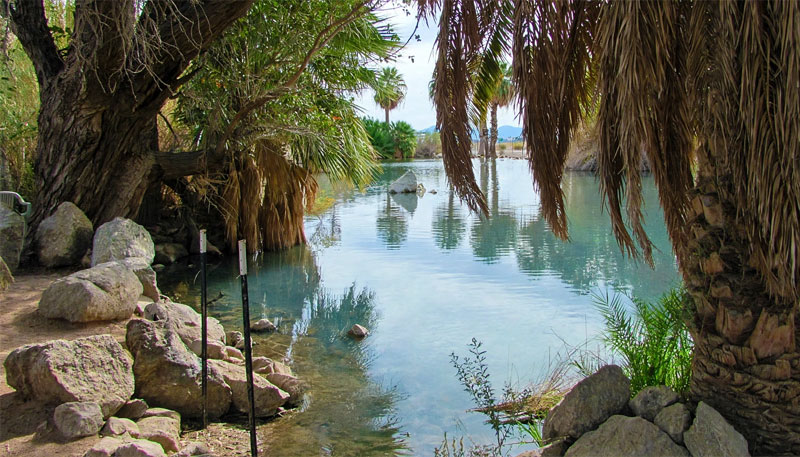 Outdoors
Inside the Yuma Conservation Garden
A volunteer-run sanctuary preserves native cacti, a palm-shaded pond, rescued desert tortoises, and vintage farm equipment inside the city.
Read the story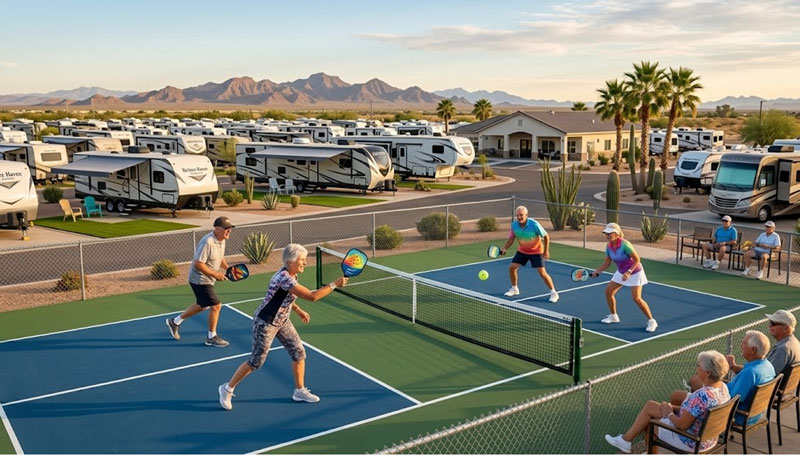 Snowbirds
A City Within a City
The $453 million economy of 90,000 winter visitors.
Read the story