
Military
HALO: The Physics of Invisibility
Where the U.S. Military Learned to Fall from the Stars
Part 1: The Physics of Invisibility
The concept of HALO (High Altitude, Low Opening) was born from a terrifying tactical problem during the Cold War: how do you drop a human being into enemy territory without the plane being shot down or the parachute being spotted on radar?
Before HALO was perfected at the Yuma Proving Ground (YPG), jumpers used static lines at low altitudes. This made the transport planes sitting ducks for anti-aircraft fire.
The Solution: Jump from above 25,000 feet—an altitude where a plane is almost invisible and inaudible to those on the ground.
By falling for thousands of feet before opening the chute, the jumper spends the least amount of time possible as a slow-moving target. In Yuma's clear, vast airspace, the military found the perfect "vertical wind tunnel" to master this deadly math.
At the altitudes tested in Yuma, the air is so thin that a jumper would lose consciousness in seconds without supplemental oxygen. The specialized "bailout" oxygen bottles and pressure masks that are now standard for Delta Force and Navy SEALs were put through the wringer in the Yuma heat.
Part 2: The School of Giants
If you see a C-130 circling over the Yuma desert, chances are you're looking at the U.S. Army John F. Kennedy Special Warfare Center and School's Military Free Fall School. This is the "Harvard" of skydiving.
At YPG, soldiers are taught that they aren't just falling; they are "flying." Using the specific "arch" posture, jumpers learn to navigate their bodies through space to hit a landing zone no bigger than a dime.
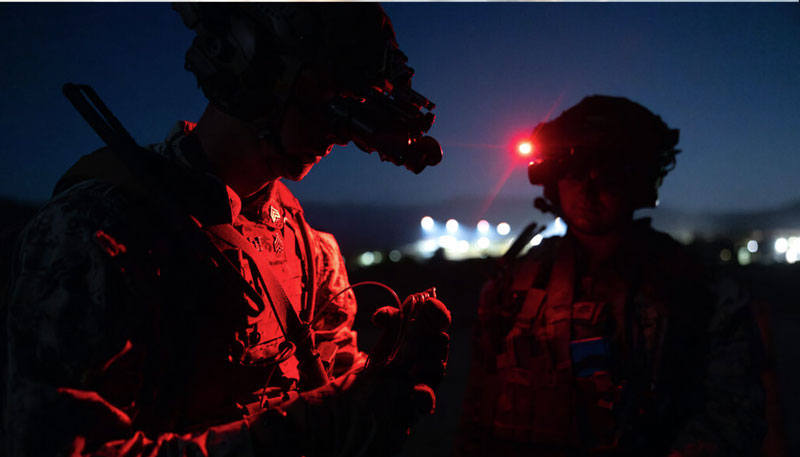
Most of the "stealth" work in Yuma happens in total darkness. Jumpers must navigate using night-vision goggles while falling through black space, relying entirely on their altimeters and their teammates' infrared strobes.
Unlike civilian skydivers, these "human airplanes" are carrying 100+ lbs of combat gear, weapons, and radios. Yuma's consistent weather and massive drop zones allow for the thousands of repetitions required to make this second nature.
Part 3: The Stealth Legacy
In the mid-1970s, Yuma Proving Ground became the primary testing site for GPS (Global Positioning System). This technology revolutionized HALO. Instead of "guessing" where they were in the clouds, jumpers could now use handheld GPS units to glide their parachutes (HAHO - High Altitude, High Opening) for over 40 miles across the desert to reach a target silently.
Today, the legacy of HALO in Yuma is felt in every major special ops mission of the last 50 years—from the secret recon teams in Vietnam to the SEALs jumping into the ocean to rescue Captain Phillips.
When a team arrives at a target without a sound, before the enemy even knows a plane was in the area, they are using techniques "Made in Yuma."
From the "Dark Cell" of the prison to the "Dark Skies" of HALO, Yuma has always been a place where people are tested at their absolute limits.
Keep reading
Follow the next thread.
 Military
The Military Desert
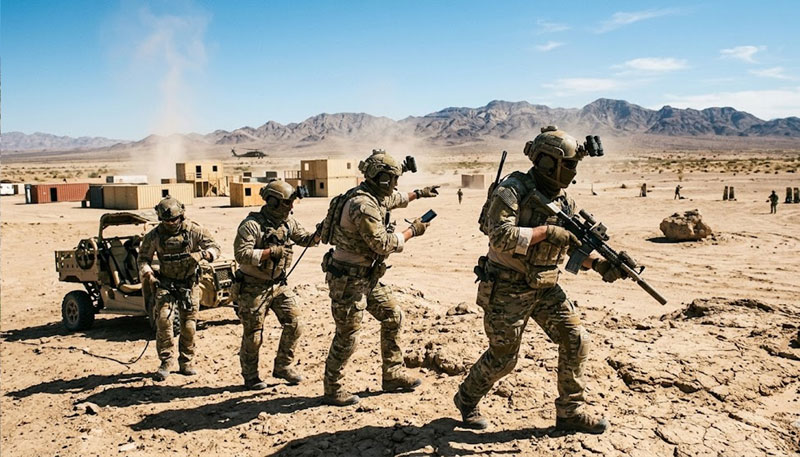
The F-35, the Proving Ground, and the birthplace of stealth parachuting.
Read the story Snowbirds
A City Within a City
The $453 million economy of 90,000 winter visitors.
Read the story History
Secrets Beneath the Sand
The complete story of Yuma, from the river crossing to the winter salad bowl.
Read the story