
Native Cultures
The Cocopah (Xawill Kunyawaay)
The People of the River
Masters of the Delta
The story of the Cocopah Indian Tribe—known in their own language as the Xawiƚƚ Kwñchawaay—is inseparable from the Colorado River.
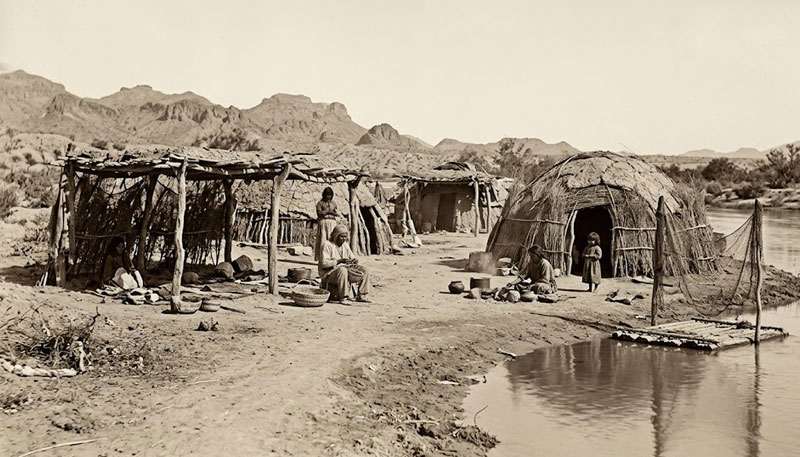
Historically, the Cocopah lived along the lower Colorado River and the delta where the river met the Gulf of California. The delta was a vast, lush labyrinth of wetlands, willow forests, and mesquite groves.
They were famous for their craftsmanship of balsa rafts made from bundled reeds, which they used to navigate the shifting currents of the delta for trade and travel. They supplemented their crops by harvesting the "bread of the desert"—the pods of the screwbean and honey mesquite trees.
A Border Divided
In 1854, the Gadsden Purchase finalized the border between the United States and Mexico, drawn directly through the lower Colorado River region. For the Cocopah, this was a physical bisection of their families, their farmable lands, and their sacred sites.
It wasn't until 1917 that President Woodrow Wilson signed an Executive Order establishing the Cocopah Indian Reservation. Originally just 1,600 acres, the tribe successfully expanded to approximately 6,500 acres divided into the North, West, and East Reservations.
As dams like the Hoover and Glen Canyon were built upstream, the lush wetlands began to dry up, forcing the tribe to shift from traditional river-pulse farming to modern irrigation and different economic models.
The Modern Era
In 1964, the tribe adopted their first Constitution and established a formal Tribal Council.
Economic Diversification includes the Cocopah Casino & Resort, Rio Colorado Golf Course, and Wild Cocopah Adventure Park.
In early 2026, the Cocopah completed a major ecological restoration project on the North Reservation—transforming 40 acres, removing invasive species, planting thousands of native willows and cottonwoods, and creating wetlands and beaver ponds.
The Cocopah Museum and Cultural Center serves as a living classroom with life-size dioramas of traditional river life and exhibits on Cocopah warriors and the "Miss Cocopah" legacy.
Keep reading
Follow the next thread.
 Native Cultures
The Quechan (Kwatsáan)
Guardians of the Granite Gates, masters of the Colorado River.
Read the story Snowbirds
A City Within a City
The $453 million economy of 90,000 winter visitors.
Read the story History
Secrets Beneath the Sand
The complete story of Yuma, from the river crossing to the winter salad bowl.
Read the story